
December 12, 2025
Playing with your 3-6 month old: supporting grasps, giggles, and rolling
As your baby moves past the newborn fog, you might wonder how "play" should change to keep up with them. This guide is about simple, joyful ways to interact with your 3-6 month old that help them explore their new skills, like grabbing, laughing, and starting to move.
It is common to feel a new pressure to "teach" your baby, but you do not need complicated toys or a strict schedule. At this age, your baby is becoming a much more active partner in play. They are learning that they can affect the world around them, and your main job is to be their responsive, loving audience as they experiment.
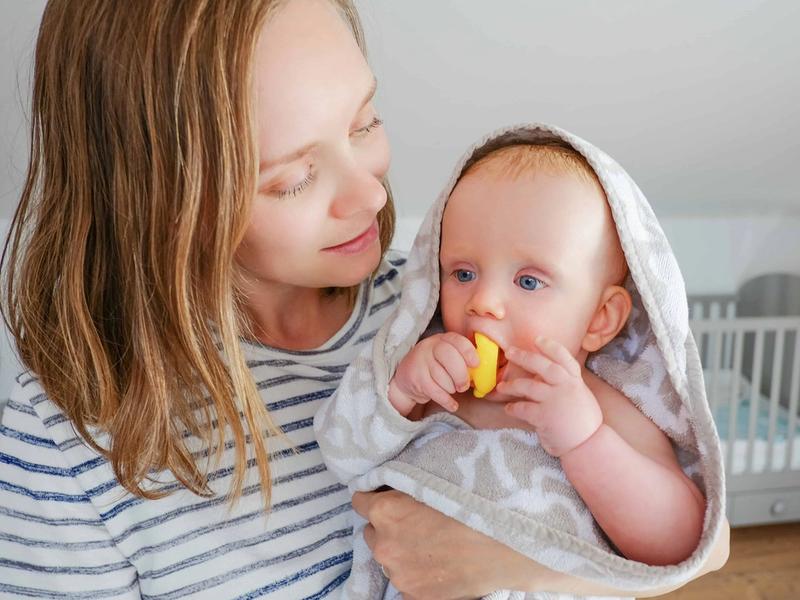
You can support their new grasping skills by simply offering them interesting, safe-to-mouth objects. You can hold a small, soft rattle or a silicone ring just within their reach and let them practice batting at it and eventually grabbing it. Letting them explore different textures, like a soft washcloth or a crinkly toy, is also wonderful stimulation for their brain and hands.
This is often when you hear those first real, social giggles, and encouraging them is pure connection. You can try gentle "I'm gonna get you" games, or make silly sounds and faces. When they smile or laugh, smile back. This back-and-forth "conversation" is incredibly powerful. It teaches them about social cues and that their joy matters to you.
This is also the age when many babies start to show signs of rolling. You can encourage this new movement by giving them plenty of floor time on a blanket. Try placing an interesting toy just out of reach on their side, which can motivate them to practice twisting and rolling to get it. This also builds the core strength they will need for sitting and crawling later.
Remember that play at this age is still about short, happy bursts, not long sessions. If your baby gets fussy, turns their head, or seems uninterested, it is a perfect time to take a break. Every baby explores these skills on their own timeline, so try not to compare them to milestone charts. If you have real concerns about how your baby is moving, interacting, or using their hands, the best person to talk to is your pediatrician.
Play in these months is about joyful, back-and-forth interaction. By being a playful partner and offering them simple chances to reach, laugh, and move, you are giving them exactly what they need to learn about their world.
A gentle reminder: The content in this article is for informational purposes only and is not intended to be a substitute for professional medical advice, diagnosis, or treatment. Always seek the advice of your pediatrician or another qualified health provider with any questions you may have regarding a medical condition. If you are facing a problem that feels sharp, persistent, or overwhelming, reaching out for professional help is a sign of strength.
Related Articles

January 14, 2026
From cries to conversation: a guide to baby communication and cognitive development
Support your baby's complex cognitive journey from reflexive crying to symbolic speech by recognizing milestones like cooing, joint attention, and name recognition. Foster this growth through "language nutrition", responsive naming and interaction, while partnering with a pediatrician to monitor critical benchmarks like babbling to ensure timely support.
January 7, 2026
Sensory foundations: understanding the development of your baby's taste
Transform your approach to feeding by understanding the biological roots of your baby's taste preferences, which serve as evolutionary survival tools rather than simple likes or dislikes. Learn to distinguish between natural hesitation and true aversion, and discover how to build a diverse, healthy palate through consistent exposure and the avoidance of unnecessary additives.

January 6, 2026
Why early reading matters for brain development and bonding
Stimulate your baby's developing brain and strengthen emotional security by integrating reading into your routine from the very first weeks. Learn to adapt your interaction to match your infant's evolving sensory abilities and prioritise connection over content.

January 2, 2026
The Evolution of Infant Bones: From Cartilage to Bone
Support the natural ossification of your baby’s skeletal system by understanding the protective measures required for their flexible, developing frame. Learn to prevent common positional issues and joint injuries through careful handling and varied movement, ensuring a strong foundation for future growth.