December 12, 2025
Growth and weight gain without panic: reading percentiles and trends
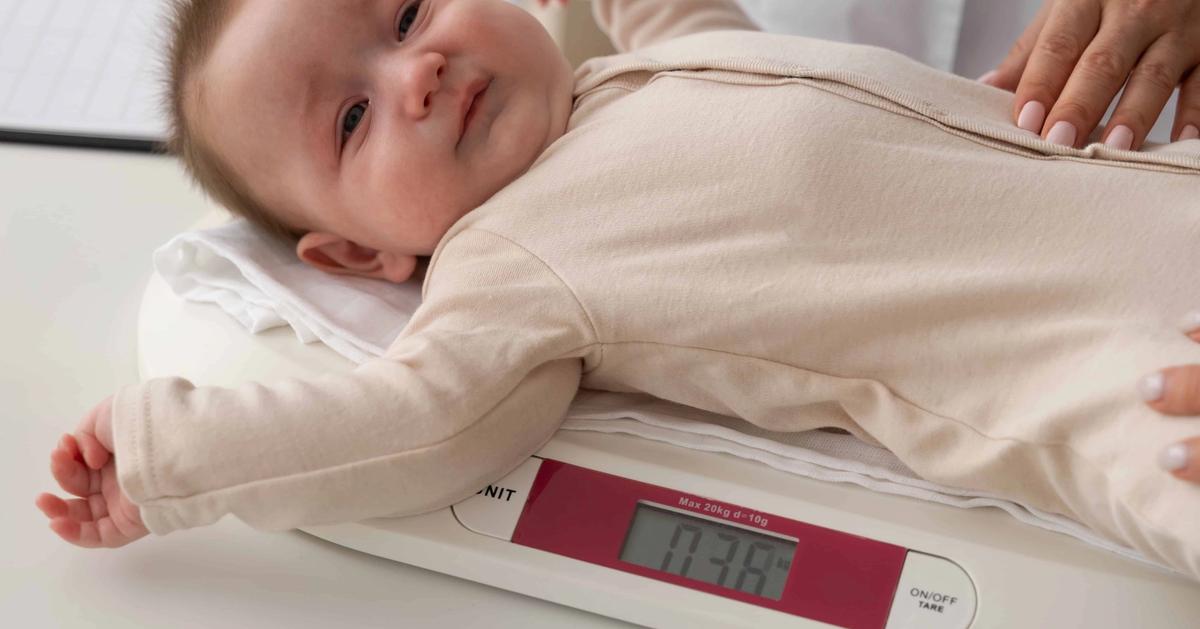
The percentile number from your baby's weigh-in can feel like a grade on a test, but this number is a tool for tracking growth over time, not a judgement of your baby's health or your parenting. For many parents, hearing that their baby is in a "low" percentile can trigger a wave of anxiety and self-doubt.
It's easy to become fixated on a single percentile number from a single visit. Many parents compare their baby's number to others or to an imaginary "ideal", which can create a huge amount of unnecessary stress. This focus on one data point misses the much more important story of your baby's growth journey.
It's helpful to first understand what a growth chart percentile actually means. If your baby is in the 30th percentile for weight, it simply means that if you lined up 100 healthy babies, 30 would weigh less and 70 would weigh more. A baby in the 5th percentile can be just as healthy as a baby in the 95th. There is no "best" number to aim for, and the charts are designed to reflect the wide range of healthy shapes and sizes.
Your pediatrician is typically less concerned with any single dot on the chart and more interested in the trend: the growth curve that all the dots create over time. The most important sign of healthy growth is that your baby is following their own unique curve consistently, whether that curve tracks along the 10th percentile or the 80th. A steady trend is what matters. While the doctor tracks the official numbers, you can observe other signs of well-being at home. Is your baby generally happy and alert when awake? Are they meeting developmental milestones? Are they having a good number of wet diapers? This holistic view is a much better indicator of health than a single percentile.
It's normal if there are small fluctuations in growth, so always leave the interpretation of the growth chart to your pediatrician. They are the only ones who can assess the complete picture of your baby's health. You should never try to change your baby's feeding habits to alter their weight without direct and explicit medical guidance.
A gentle reminder: The content in this article is for informational purposes only and is not intended to be a substitute for professional medical advice, diagnosis, or treatment. Always seek the advice of your pediatrician or another qualified health provider with any questions you may have regarding a medical condition. If you are facing a problem that feels sharp, persistent, or overwhelming, reaching out for professional help is a sign of strength.
Related Articles

January 14, 2026
From cries to conversation: a guide to baby communication and cognitive development
Support your baby's complex cognitive journey from reflexive crying to symbolic speech by recognizing milestones like cooing, joint attention, and name recognition. Foster this growth through "language nutrition", responsive naming and interaction, while partnering with a pediatrician to monitor critical benchmarks like babbling to ensure timely support.

January 7, 2026
Sensory foundations: understanding the development of your baby's taste
Transform your approach to feeding by understanding the biological roots of your baby's taste preferences, which serve as evolutionary survival tools rather than simple likes or dislikes. Learn to distinguish between natural hesitation and true aversion, and discover how to build a diverse, healthy palate through consistent exposure and the avoidance of unnecessary additives.

January 6, 2026
Why early reading matters for brain development and bonding
Stimulate your baby's developing brain and strengthen emotional security by integrating reading into your routine from the very first weeks. Learn to adapt your interaction to match your infant's evolving sensory abilities and prioritise connection over content.

January 2, 2026
The Evolution of Infant Bones: From Cartilage to Bone
Support the natural ossification of your baby’s skeletal system by understanding the protective measures required for their flexible, developing frame. Learn to prevent common positional issues and joint injuries through careful handling and varied movement, ensuring a strong foundation for future growth.